
Architecture3 min read
Semantic context for enterprise AI
Why enterprise AI needs explicit identities, business definitions, temporal context and evidence boundaries alongside retrieval.
Understand how business definitions, reliable integrations and clear accountability shape enterprise decisions.
Explore the library
Guides to enterprise architecture, operations and data practice.
16 resources
Why enterprise AI needs explicit identities, business definitions, temporal context and evidence boundaries alongside retrieval.
Design operational knowledge graphs around specific relationships, accountable assertions and bounded decisions.
Event identity, transactional boundaries, ordering and replay for enterprise systems.
Evaluate distributed access and persisted data products through freshness, performance, governance and recovery requirements.
Define schemas, business meaning, compatibility and delivery expectations between data producers and consumers.
Extend lineage from dataset dependencies to the source versions, rules and actions behind a business decision.
Build an evaluation approach that examines evidence, permissions, uncertainty and action quality alongside answer correctness.
Connect asset identity, signal quality, production state and maintenance evidence before interpreting industrial observations.
Connect shipment events, commitments, inventory and response ownership to manage supply chain exceptions with context.
Reconcile financial records with defined comparison rules, matching evidence and exception handling.
Design decision workflows with explicit evidence, policy versions, approval boundaries and recoverable execution.
Distinguish business entity identity from user identity and design mappings that preserve source authority and history.
Design permission boundaries across indexing, search, context construction, generated answers and cached results.
Observe freshness, completeness, correctness and recovery across the path from source data to a business decision.
Compare APIs, events, change data capture, batch exchange and federation through consistency and operating requirements.
Review an enterprise intelligence architecture through business outcomes, evidence paths, trust boundaries and recovery scenarios.
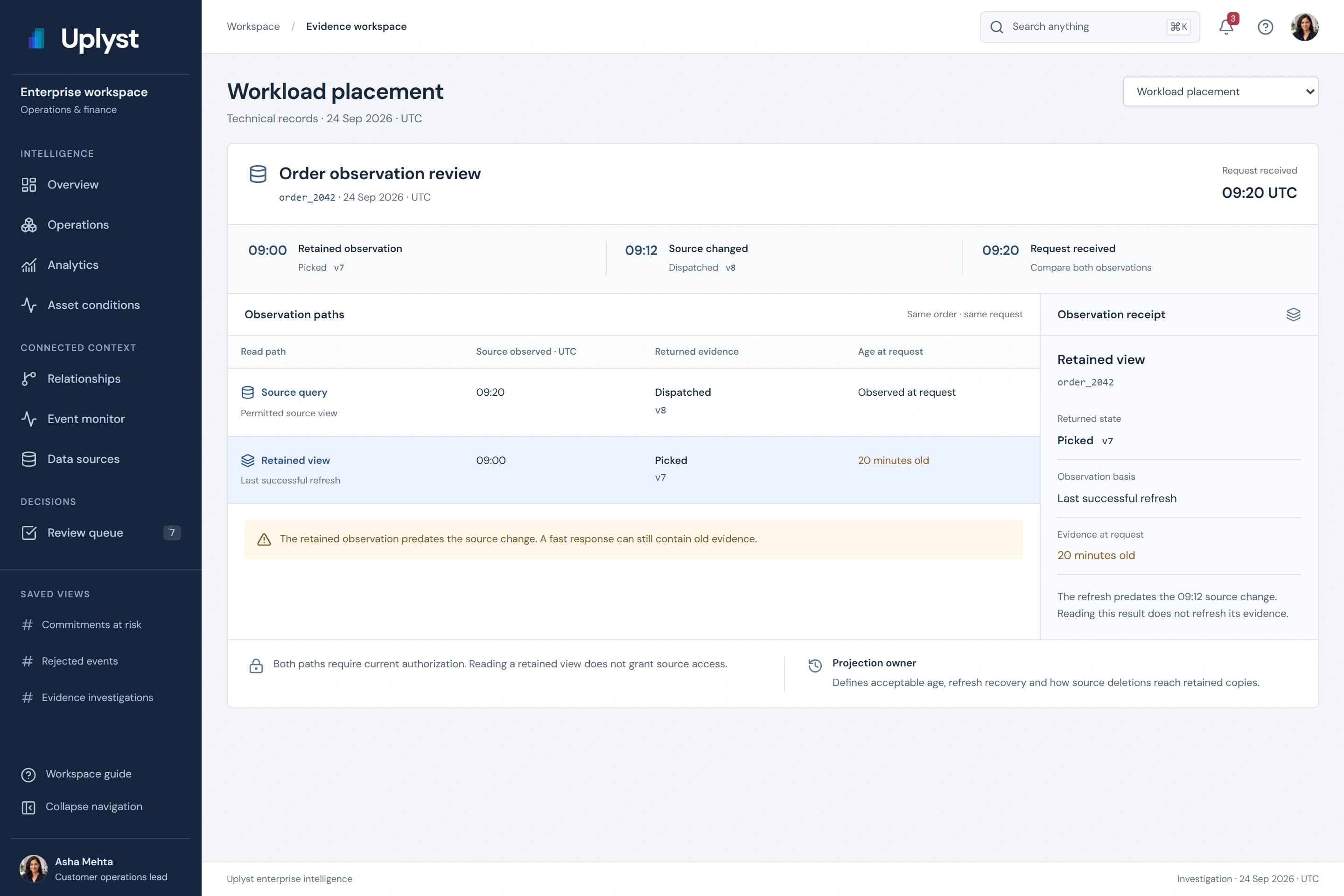
Compare source queries with retained views and their refresh requirements.
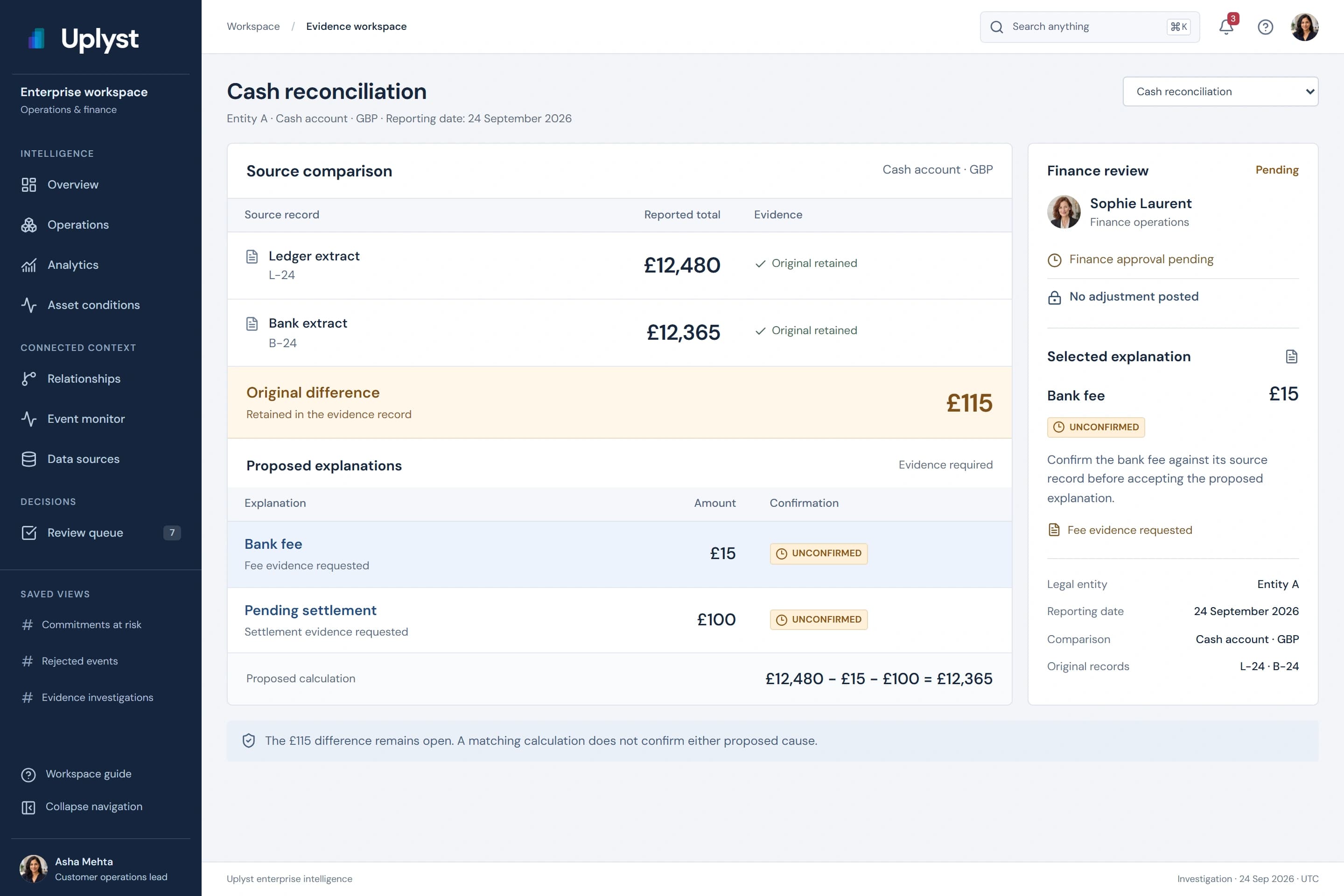
Match transactions, investigate differences and preserve the supporting records.
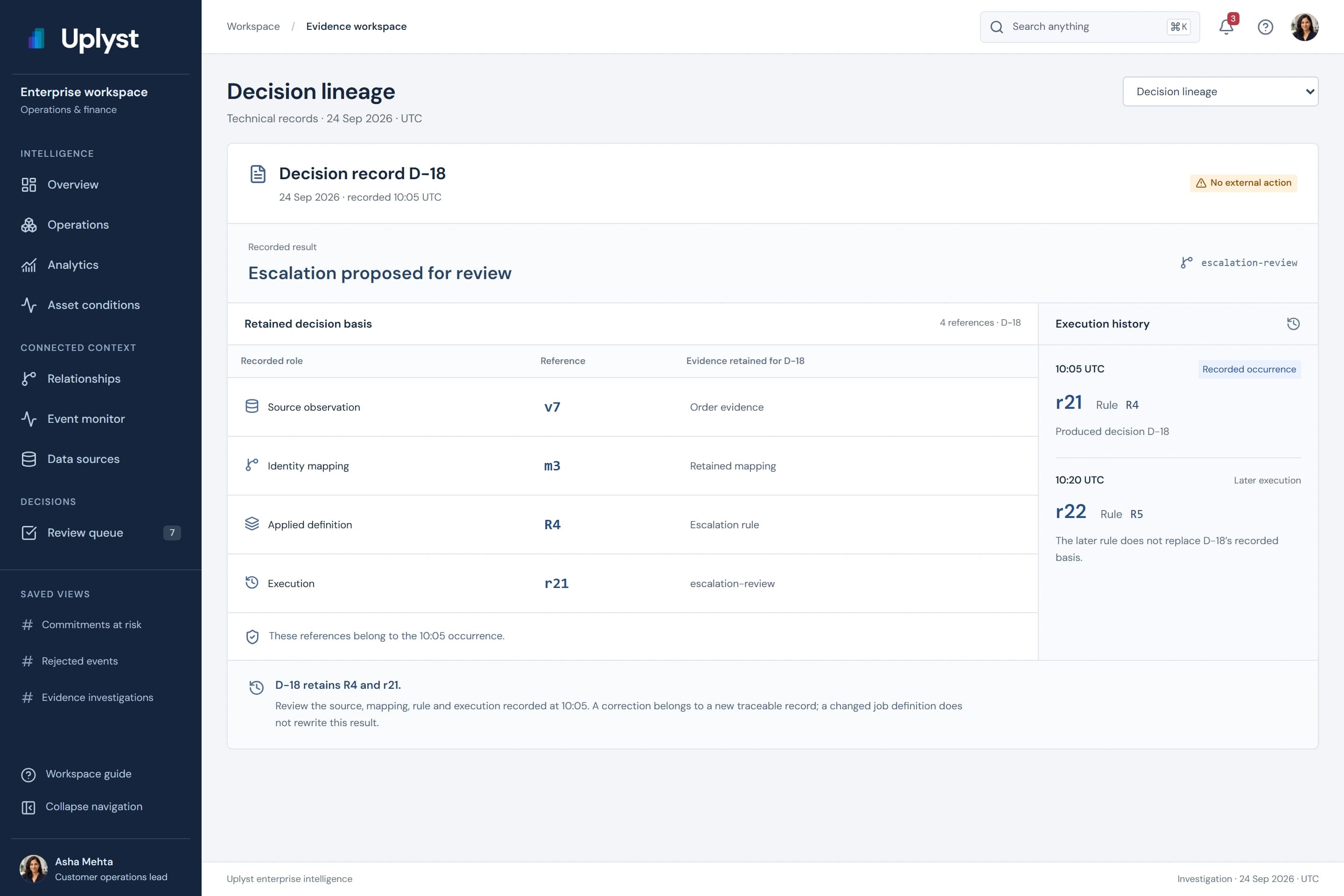
Trace a decision to its source records, definitions and execution history.